“If slaughterhouses had glass walls, who would want to eat meat?”
Sir Paul McCartney
At the beginning of September 2017 my wife and I “went vegan”. It may have actually been late August or mid September of that year. The date is not significant. Initially, the primary motivation to change our lifestyle came after watching a documentary one evening on Netflix called What the Health. Among other things, the film presents graphic images and video taken undercover in actual factory livestock farms showing the heart wrenching horrors of what animals commoditized for human consumption are subjected to in order to become food products for people and their pets, as well as other commodities we use on a daily basis. The data presented was compelling and incontrovertible.
This wide scale barbaric torture and inhumane treatment of the sentient creatures kept in these facilities cannot be understated. Watching a film presentation graphically depicting the plight of these animals evokes the same feelings of horror, disgust, and disappointment one experiences when seeing those sad, somber pictures of the Holocaust; only here it involves animals, and it is happening daily on a much larger scale. When humans commit violent acts of unspeakable horror and inhumanity against one another, and do so with intention, impunity, and indifference, up to and including the taking of another person’s life, we are outraged, demanding swift justice and accountability on the part of the perpetrators. But no one really notices, no one gets outraged, no one really recognizes the difference between that pound of ground chuck or chicken breasts in the meat department at the local supermarket and the sentient, intelligent, living beings from which it was rendered. Concerning animal abuse, we make the connection readily when it has to do with the inhumane treatment of what are referred to as “companion” animals. In the case of livestock animals, however, we conveniently say, “Oh they’re just here for food!”, and remain completely disconnected from, and indifferent toward the very real and horrific handling and abuse involved in the breeding, keeping, and killing of these sentient creatures. Thus humans have become hardwired contrary to their own nature to remain indifferent toward what is humane vs inhumane as it applies to two groups of animals we rationalize as being either for “food” or some other utilitarian purpose, or kept for our “companionship”. But in fact this dichotomy is false, because inhumanity is always inhumane no matter if it is perpetrated on Man or Beast.
The factory farming industrial complex is the greatest horror show no one really sees or gives much thought. The machinations of the livestock, dairy, and fisheries industries are kept well hidden from public view. Meanwhile consumers are being misled by clever marketing campaigns: such as packaging labels that advertise “free range” and “cage free” meat and poultry products. These are nomenclature intended to disengage the consumer’s conscience and prevent the bringing to light what is really happening from the perspective of the animals whose sanitized remains are wrapped neatly in those packages; animals who throughout their entire lives were enslaved, exploited, and for the most part subjected to a daily existence of cruel and inhumane treatment, neglect, and at the end of the day, slaughtered. There is nothing “humane” about the systematic enslavement and slaughter of over 150 billion livestock animals each year globally. Corporations with deep pockets and powerful lobbies spend billions of dollars annually to bring their products to market while hiding from public view the abject cruelty that goes on daily behind the windowless walls of their production facilities. The vehicle of this corporate stratagem involves whitewashed, sanitized marketing gimmicks that cleverly serve as a distraction mechanism designed to produce and maintain the level of cognitive dissonance needed to keep consumers coming back for more and more meat, dairy, poultry, and fish year after year. And it’s a stratagem that works well. “Beef. It’s what’s for dinner!” … “Got milk?” … and “You deserve a break today” … are a few examples of the clever sloganeering we’ve seen in media and TV ads over the years. If “Truth in Advertising” stands for anything there ought to be at least a 30 second commercial during Super Bowl games, maybe something with Barry Manilow singing the familiar refrain from the McDonald’s jingle slowed down to a dirge behind a video montage revealing the horrific display of carnage and cruelty and sadness that becomes the food we eat. Close with the caption: “Exactly who deserves the break today?”, with appropriate logo endorsements and info resources in tow.
Like most Americans my wife and I had been raised on a Standard American Diet of meat, dairy and cheese, and had lived this way all our lives. As a result of our eye opening experience that evening, being shocked and horrified by the information presented, we had something of an epiphany. We resolved on the spot to never again eat food of any kind that was produced from animals, be it livestock, fish, poultry, or dairy products. Was it difficult to change? Not particularly, no. When you come to believe strongly in something, being convinced of the rectitude of that belief, integrity demands that your actions now align with and validate your new found convictions — and so you change. Anything else or less than change is hypocrisy.
There is a lot of discussion about “animal cruelty” and “environmental sustainability” in the blogosphere and on social media these day, with lots of well meaning people and armchair pundits pontificating about how best to address these vital issues. All of this “activism” is no doubt with good intentions. Most of it, however, is misplaced and lacking follow through with real action on the part of those doing the advocating. A UN study published in 2006 concluded that livestock were responsible for about 18% of human-caused greenhouse gases. The meat industry, of course, has criticized that number as being too high. Other studies as recent as 2009 and 2013 now consider the UN figure to be too low, estimating the data show that livestock farming produces between 20% and 50% of man-made greenhouse gases. The bottom line is that the greatest contributor to environmental destruction comes from meat producing industrial factory farming. Being vegan it is very difficult for me to seriously entertain someone’s platonic advocacy for environmental sustainability while they regularly contribute to the environment’s destruction on a consumer level by their dietary choices of meat, dairy, fowl, and fish. I like what Mark Tercek, CEO of the Nature Conservancy, said in a recent interview with Fortune Magazine about why he’s vegan:
“…I’m a committed vegan for various reasons. If more people had vegetarian or vegan diets, especially in the developed world, the environmental impact would be significant. I sometimes wonder if environmentalists should make a bigger fuss over simple diet changes.“
Indeed they should, as Mr. Tercek rightly suggests.
Action follows conviction. Conviction follows belief. Belief follows awareness: and that awareness must be arrived at via evidence-based information supported with the best available science. Simply changing our behavior is not enough. We need to change our beliefs in order to understand — and to actually feel — that when we harm our environment we are harming ourselves. Conversely, whatever we do that enhances and protects environmental ecosystems, no matter how small or mundane those actions may seem, we are in fact protecting and improving not only our own lives but the lives of all sentient creatures with whom we share a dependency on this planet’s viability for our basic common survival. Faith is never blind when it is intelligently guided by reason and science.
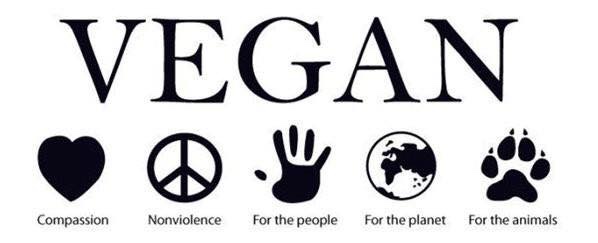
For us the primary motivation in adopting a plant-based lifestyle took form from a moral and humanitarian conviction that compels us to avoid consuming food and other consumer products rendered from animals. Secondarily, but of no less importance, our motivation has been to promote better personal health, and a healthier planet for all sentient life. So it remains a two-fold objective with us. On the one hand, we observe a plant-based diet because being aware of the animal cruelty and exploitation prevalent in the livestock, dairy, poultry, and fishery industries, we can’t with good conscience keep supporting those industries by what we eat. On the other hand, eating food rendered from animals and livestock is an environmentally unsustainable paradigm for feeding humans. So we have a conscientious objection to consuming products produced from animals. We want to take better care of our bodies and minds, especially as we are aging. We also advocate for a cruelty-free planet and a sustainable environment for all. Being vegan connects with, and completes the circuit for actively addressing these objectives. It has been understood and well documented by both the medical and academic science communities for over four decades now that the nutritional value of plant-based food far surpasses that of food products rendered from animals; the latter having been linked to the promotion of chronic disease in people who follow a Standard American Diet (SAD), aka a Western diet. While both of these objectives — personal health and promoting cruelty-free, sustainable lifestyle choices — continue to motivate us, the fact is we enjoy the taste of our food now more than when we ate animals. We simply no longer crave the taste of meat, seafood, poultry, or dairy. Nothing tastes as good as being healthy feels! And nothing feels as right as compassion on our plate.
Being in our mid sixties and going vegan with our diet seemed a pretty radical move. Here we were meat eaters all our lives, and now we were diving into this new way of eating headfirst and fairly clueless how to go about it. As far as challenges and things we had to figure out — grocery shopping became a challenge immediately. It also provided an opportunity to expand our thinking about food and supply chains. Prior to going vegan/plant-based not much thought was given to what we shopped for when buying groceries. When shopping at our local supermarkets pretty much anything on the aisles and in the frozen foods, meat and dairy, and produce sections was going to end up in the cart. Always there was meat, milk, eggs, and cheeses, and lots of processed food products, sweets and candy, and soft drinks, etc. Looking back on it now, the way we used to eat was fairly mindless. As consumers we were not very “label conscious” or selective concerning what we bought, or how and with what ingredients it was made, or where it came from in terms of provenance. Package labels that said “certified Organic” and “non-GMO” translated as “more expensive” and “unaffordable” vs conventional products. Being newly retired at the time and on a fixed income we were more committed to the bottom line than we were to buying healthy food. Cost versus the actual quality of the food we put in our bodies determined what we bought. Going vegan changed all that. We weren’t just human garbage cans anymore. We had a cause and an objective now, so we resolved to be smarter about food — all food, not just the stuff we would now be eating on a plant-based diet.
It is important to establish a solid support network early in this journey. We turned to vegan and plant-based support groups on Facebook initially. It took some trial and error, but eventually we found a couple of groups that seemed to be managed well, and provided a supportive and knowledgeable community forum. Through these groups we discovered plant-based recipes to try, as well as informative films and books to check out. We became students of plant based nutrition, and nutritional science in general. Our awareness of the connection between food and disease grew concurrently with our awareness of the environmental impact caused by unsustainable factory farming practices. Our grocery shopping experience became more like a field trip. We committed to be smarter, more selective about what we bought. We changed our maxim. The new rule now was: Organic and non-GMO certified foods first and if available, and only plant-based products in general. The price is the price. We figured out right away that we needed to expand our tent pegs. Kroger alone was not going to provide a source for what we wanted to eat now. We now routinely shop at three or four different stores, Kroger being one of them, and we also acquire produce from the local farmer’s market near our home when it is open for the season. Grocery shopping is anything but mindless now, and I actually look forward to it.
Transitioning from a meat and dairy-centric diet to one consisting of only plants and whole food presents a challenge for most people. But don’t people struggle in general with committing to any dietary lifestyle change? You like your food. No matter if it is haute cuisine or convenience food, you like what you like; and when a real dietary game changer comes along it can be a challenge. Many come down to the river and wade into Vegan waters unsure if they can actually swim. Yes, you can! But it helps to understand why and to what purpose you’re committing to make such a change in the first place. For me, being vegan validates my core beliefs having to do with many things — spiritually, physically, ethically — that connect me with myself and my relationship with all other living sentient beings; and the “diet” represents the most natural and readily available vital force that actually does change the world for the better, incrementally with every meatless meal! But that’s just me. What is being vegan really about? It may be because you want to make a difference for good: one that impacts the world and the environment, and gives peace a chance; one that puts down unnecessary and needless suffering and pain because of man’s bent in general. It may be you just want to improve your personal health and wellbeing in areas where plant-based proteins have been measurably shown to do that.
I think it is important to identify early on exactly why one wants to make this change: be it for health, or reasons based on the ethical and humane treatment of animals, or taking an active, responsible, and readily available advocacy of environmental protection and sustainability — or a combination of all these reasons. The information base about the “science” of human nutrition is vast. It is important to correctly understand what the human body truly needs in terms of nutrition in order to promote and maintain optimum health, and then resolve to learn about that and apply that. What “label” I identify as — Vegan, Vegetarian, WFPB, WFPB-NO, etc. — is not really that important to me, and it is not solely why I am doing this. Neither my wife nor I had much of a transitioning phase. We jumped into this feet first and cold turkey. Once we saw the Holocaust scenario of the meat, dairy and fisheries industries, animal protein in every form was off the menu for good for both of us and for the rest of our days. So we didn’t really “transition” from the SAD diet to anything. We stopped eating food rendered from animals and started eating food made only from plants. Our bodies adjusted to the change without much drama, and since we were generally healthy to begin with and for our ages we don’t have any specific testimonials to offer about radical health improvements. That said, we are continually learning more as we go, and tweaking our diet in ways that we believe will help us maintain optimum health and hopefully live a long and healthy life. Going plant-based has in no small way changed for the better my entire perspective on my life and lifestyle, and my place in the kind of world in which I wish to live. The old saying, “You are what you eat” runs long and deep; our food being the common denominator that connects us with everything and everyone in our experience. What I am is “alive”. What I eat, I eat to live and to promote health and sustainable living everywhere.
Almost everything we eat now is prepared at home and sourced from organically grown whole food. Neither my wife nor I claim any special culinary skills or experience. We are not trained chefs. We have no formal education in nutrition or food service. We simply committed to learning how to source and prepare food that provides us with great tasting high quality nutritionally dense meals that are cost-effective, and in most cases more affordable compared to the way we used to eat. That’s a surprise, and a benefit too! It’s like getting a “bonus” for eating healthy food. Why wouldn’t you?
Plant-based food is delicious! I do most of the food prep and cooking in our home. The kitchen is my sanctuary now, my happy place, and I have developed a very strong connection with this process of learning how to create fabulous meals using whole foods. I’ve discovered a new found passion for cooking, and “cooking with purpose” beyond just the need to feed. For me this way of living and eating connects me with everything that has meaning and in no small way defines my true self as a human being. I never cease to be surprised and amazed by how many ways plant-based foods can be prepared with full flavor and nutritional value. We don’t miss meat and dairy in our diet at all, and we eat everything we like to eat. In fact we eat like Royals, and our food tastes amazing! Even our non-vegan friends and family rave about it.
A word about “Speciesism”. It’s a funny sounding little word that often crops up in discussions about animal cruelty. As defined by Oxford Languages, Speciesism is “the assumption of human superiority leading to the exploitation of animals.” It is an ideology that has prevailed throughout generations of human history evidenced as prejudice or discrimination based on species, especially discrimination by humans against animals. To fully grasp an understanding of how flawed an ideology such as Speciesism actually is one must first come to understand the fallacious reasoning that leads us to believe that one group of animals is food and another group of animals are companions. The reasoning behind Speciesism is flawed, of course, since in fact both groups — those we call “companions” and those we choose to eat and wear — represent living, breathing, sentient beings, whose lives in fact have purpose and value, just as our own, beyond what may be commoditized by humans. To further illustrate this fact, imagine someone where to come to your home, take a kitchen knife from the drawer and slice the throat of your dog or cat, leaving it to bleed out in agony on your kitchen floor. The horror you would experience if witnessing such a ghastly scenario would be beyond comprehension. But remove your own emotions from this grisly scene for a moment and consider objectively the point of view of the animal: your dog or cat, or whatever. How is the horror, confusion, pain, and sheer terror your precious family companion animal is enduring in its final moments before expiring any different than what the pig, the cow, the chicken, and the fish you love to eat all experience when they are being rendered on the killing floor at the factory farm for your food? From the animals’ perspectives they may be of different species, but they are the same — in fact exactly the same — as any other creatures of sentience, including your own self, in all the ways that matter. So what’s the difference? The difference is that the human mind has been warped — by culture, by religion, by media, by marketing, and certainly by a lack of critical thinking — to believe that humans are “superior” to animals; and this superiority, therefore, entitles us to eat them, wear them, exploit and commoditize them for our own purpose and pleasure! Yet you wouldn’t eat your dog or your cat, or your pet parrot or turtle. Would you? That would be irrational, even immoral, would it not? Truly, “if slaughterhouses had glass walls, who would want to eat meat” at all? This so-called “superiority” lives by the cognitive dissonance of the human mind; being not so much a form of superiority accorded by Nature, but more a kind of base indifference to the suffering of our fellow creatures who also inhabit this small planet, and who share with us a dependency upon its resources. By the flawed, irrational, immoral premise of Speciesism humans mark, with impunity, one group of animals over another to be exploited, commoditized, subjugated, enslaved, violated, and utterly destroyed against their will for any reason. In the disconnected mind one group of animals is seen as “friend” to be loved and cared for and protected, while indifference to the suffering and subjugation of the other enables them to be viewed as “food” or clothing, or any number of other useful objects to be exploited. An enlightened mind, however, understands a higher truth more central to our own experience as an intelligent, highly evolved species. It is the truth, as George Bernard Shaw wrote, that “the worst sin toward our fellow creatures is not to hate them, but to be indifferent to them: that’s the essence of inhumanity.”
This idea that being human somehow makes us superior to animals, therefore entitling us to judge one group over another in this way, has been deeply ingrained in our collective psyche. Yet the truth is, we humans are not above animals. We live among them. We are in fact one of them. Our “superiority” then must be redefined by the moral responsibility we have to live kindly and respectfully toward all sentient beings in whom is found the common breath of life. Doing so must be among the highest intentions of our purpose in the Earth, a reflection of what it means to be simply and truly “human”. And that, my friends, is a recipe for the improvement of ourselves, our planet, and the rest of the precious and amazing creatures with whom we share it.
Bon appétit… And bon viveur!
Glenn E. Arnold
August, 2019
 My Numinosity...