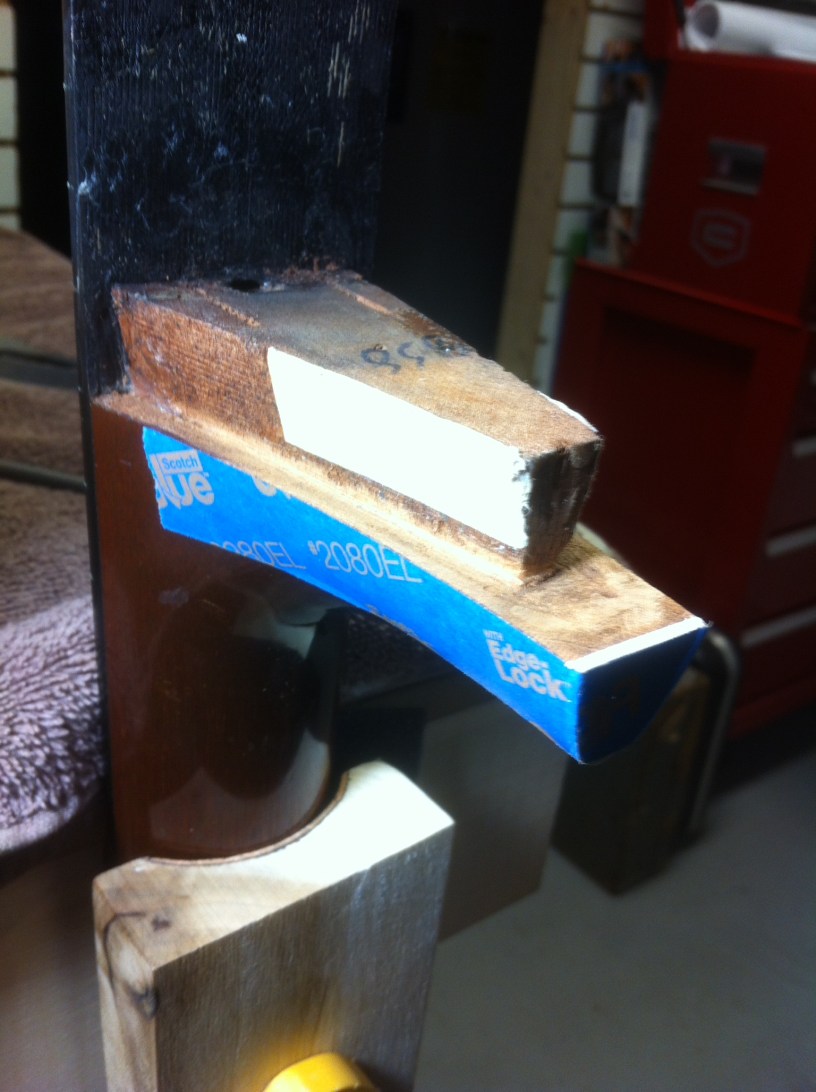
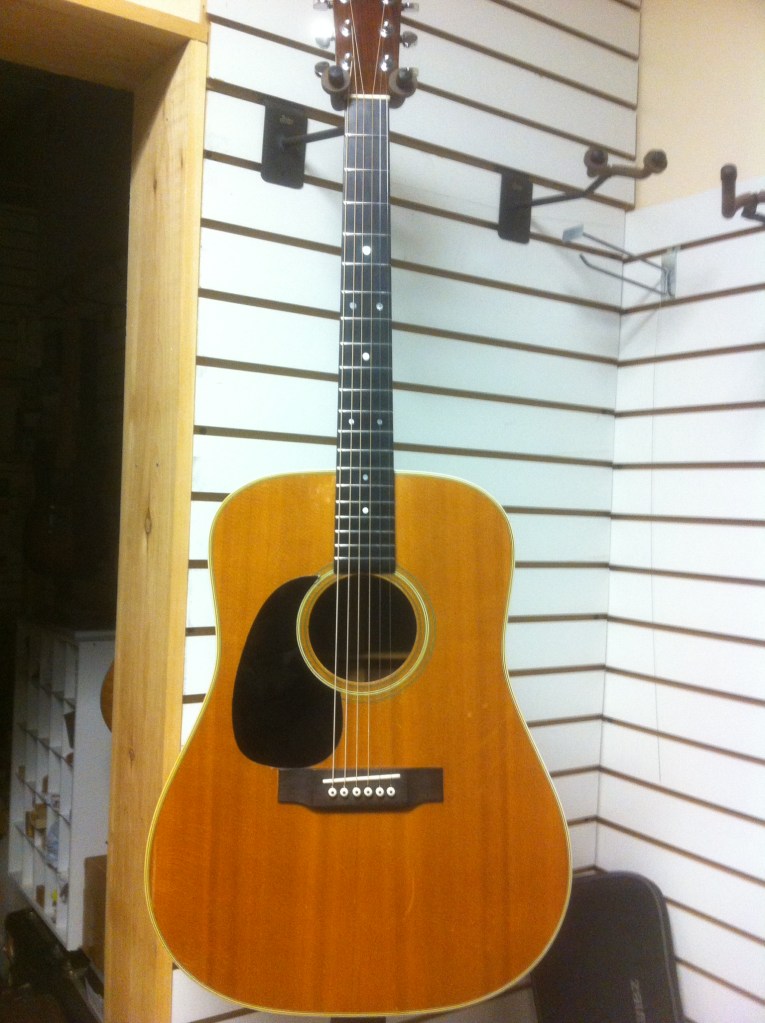
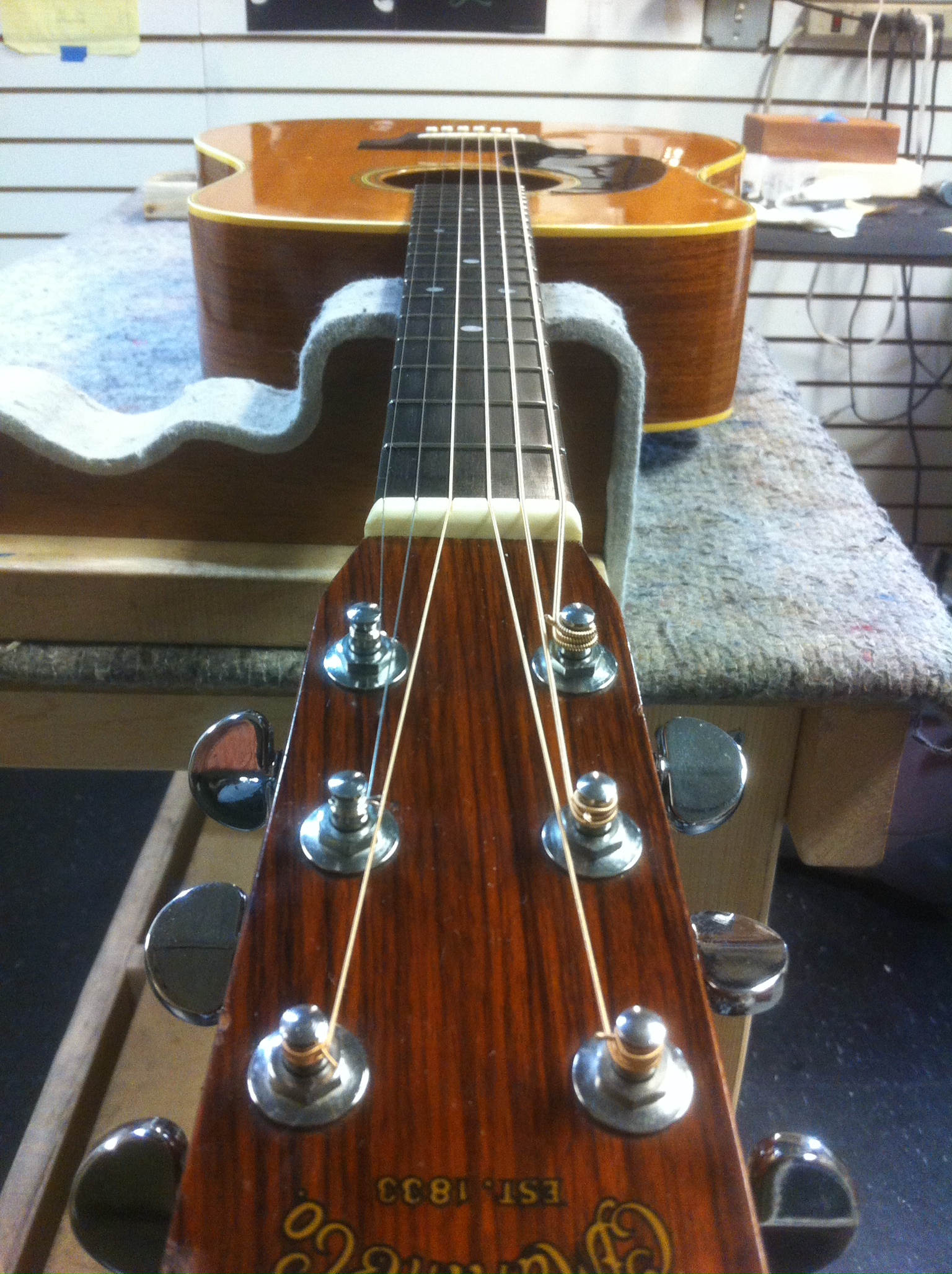
A Martin D28-L, sn 367858. Manufactured by C.F. Martin in 1975. This repair involved a neck reset, a new bone nut and compensated bone saddle, both hand-carved, and then the instrument was restrung and setup to the player’s specifications. This neck reset repair was completed in January 2015, when my business, Coastal Guitarworks, was located on Abercorn St. in downtown Savannah GA. The guitar was originally built to accommodate a left handed player (hence the “D28-L” model type), and had been converted to right hand at some point, presumably by the current owner who was right handed. For some reason or another the pickguard was left in it’s original orientation, as depicted in the pictures below. This might have been done to avoid an added expense of refinishing the top, which was customarily left unfinished beneath pickguards on Martin guitars of that era. On the down side, these guitars often developed hairline cracks along the grain on the tops below the pickguards due to the shrinking of the pickguard over time and as the unfinished wood underneath aged disproportionately to the surrounding finished top. Fortunately this Martin exhibited none of those anomalies.
Neck resets are for restoring a guitar’s playability when it has been compromised by a warped neck. Over time as the warpage progresses, the neck-to-body-to-bridge geometry changes, making the instrument difficult to play, and often unplayable.
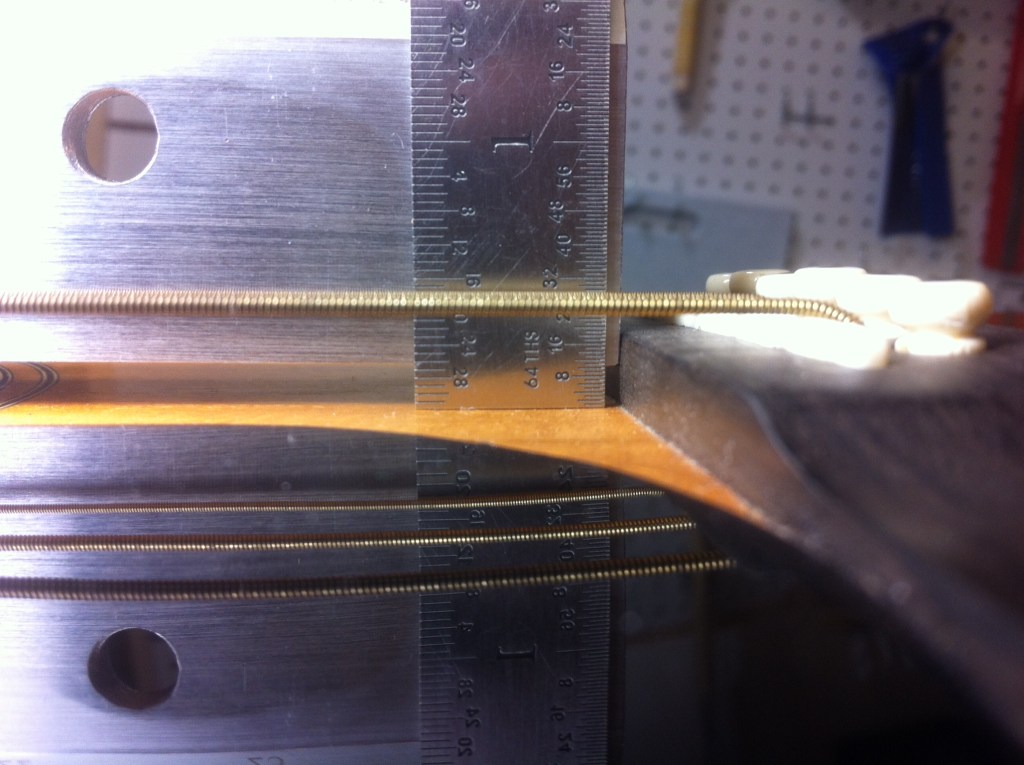
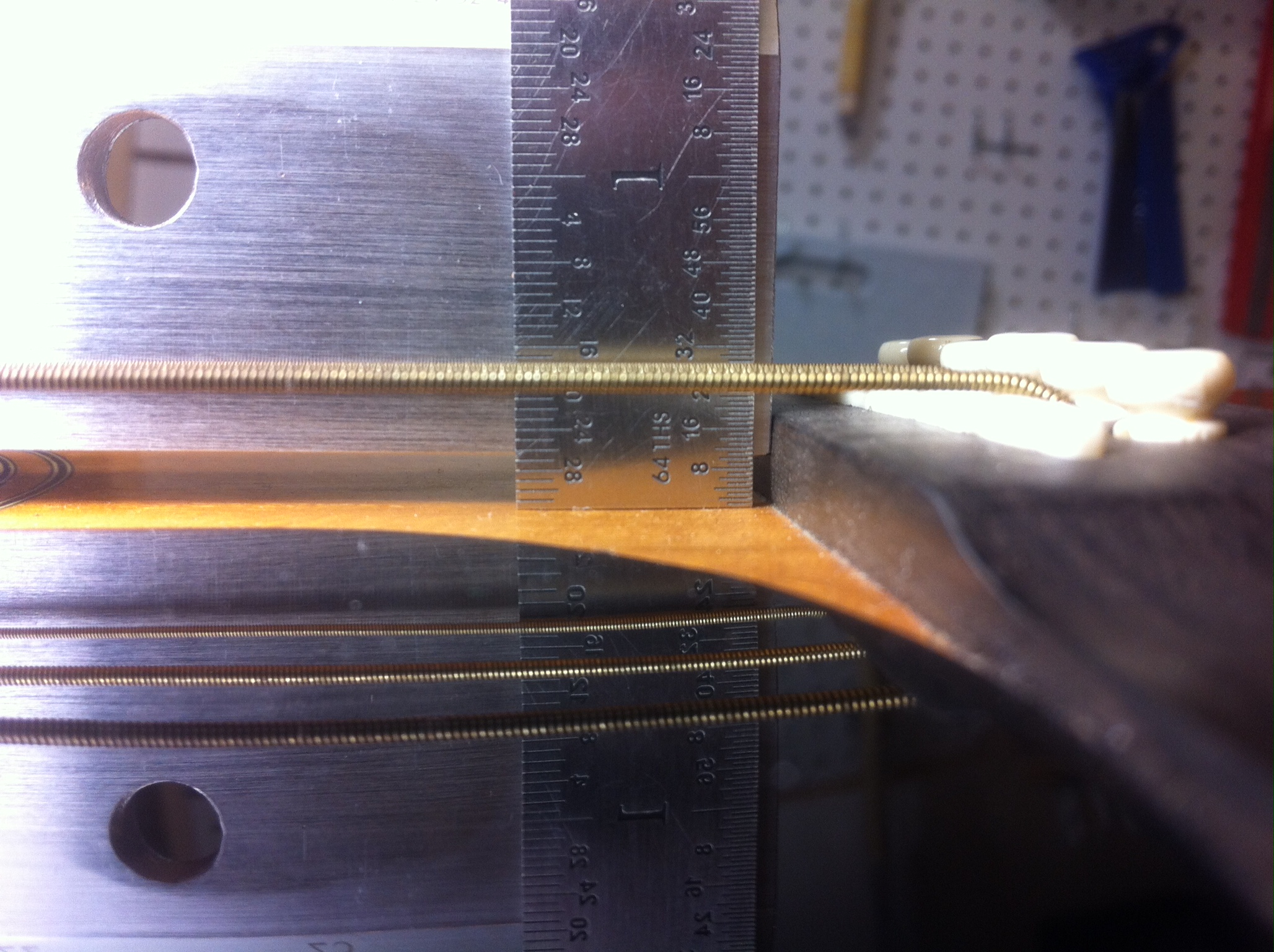
A precision straight edge may be used to measure the amount of deflection in either direction above or below the top of the bridge. This should always be evaluated under string tension with the guitar tuned to pitch. Acceptable tolerances may be as minuscule as +/- 1/32″. The “ideal” angle of the neck should leave the tip of the straight edge just “kissing” the top of the bridge when strapped across the fretboard and top, and extended to the center of the bridge. Optimum string height over the top at the bridge should register between 13/32″ and 16/32″. In many cases the top itself may become warped and begin to bulge behind the bridge due to prolonged string tension pulling against the bridge in a downward vector with respect to the compromised neck geometry. In extreme cases bridges lift up under these stressful conditions, and tops have been seen to crack under pressure between the bridge and the soundhole. Braces underneath the top may loosen or crack, escalating both the difficulty and the expense of making the repair with a successful outcome. A competent tech will be one who is able to inspect and spot these areas of concern, and faithfully remedy all maladies in a manner that best serves the instrument and satisfies the customer’s expectations. The complexities of a neck reset often can, and do, spawn ancillary repairs, such as the ones described above. In all cases the instrument should be serviced in a protracted manner, each problem area being addressed and corrected in step with the whole scope of the repair before the neck and body are even separated.
On less expensive instruments where the cost of resetting the neck exceeds the value of the instrument, it may be possible to plane or sand the height of the bridge and/or saddle lower to achieve better playing action. NOTE: This is a work around and is NOT a fix for the structural issue of a warped neck or top, and compromised neck angle.
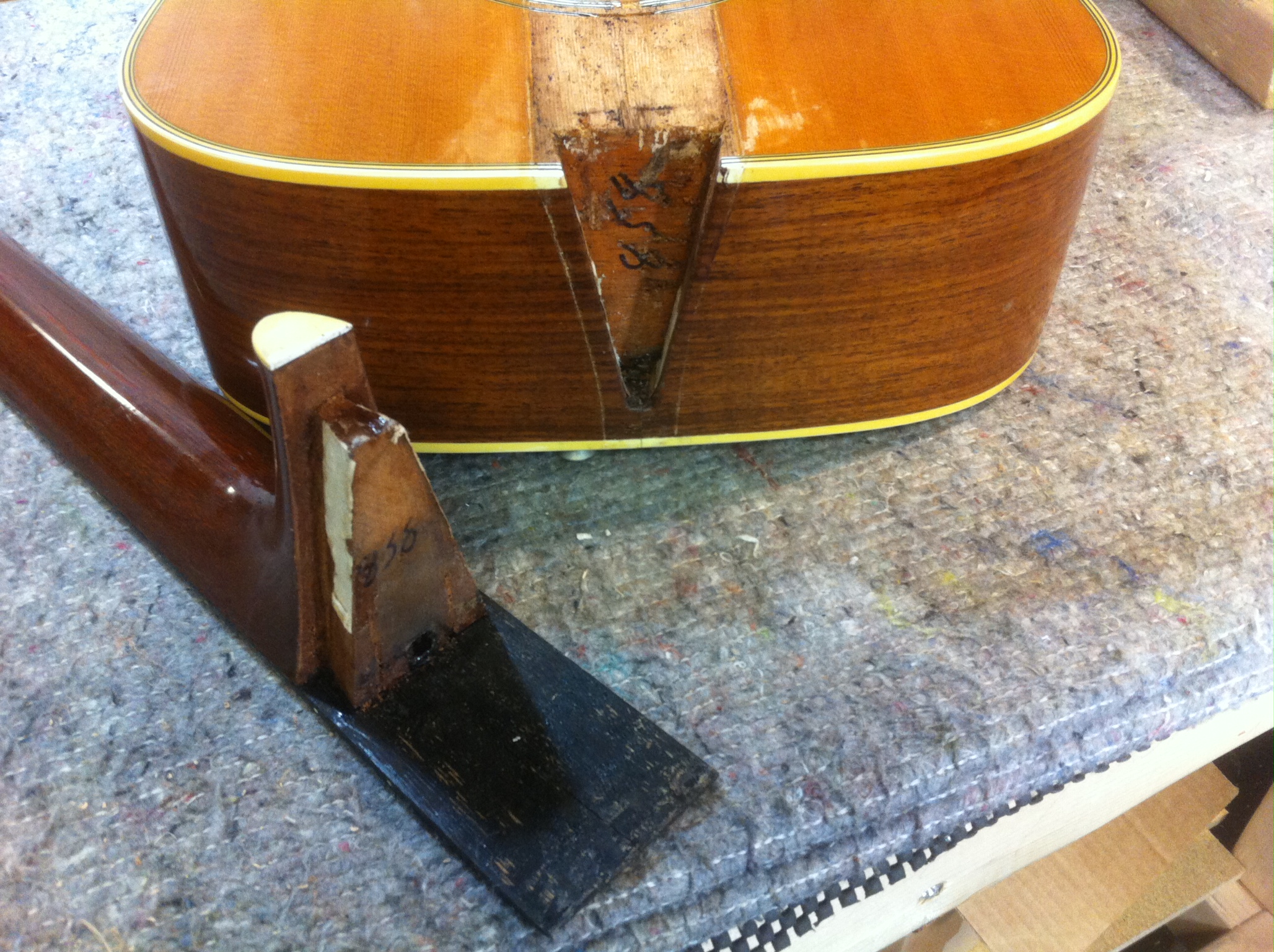
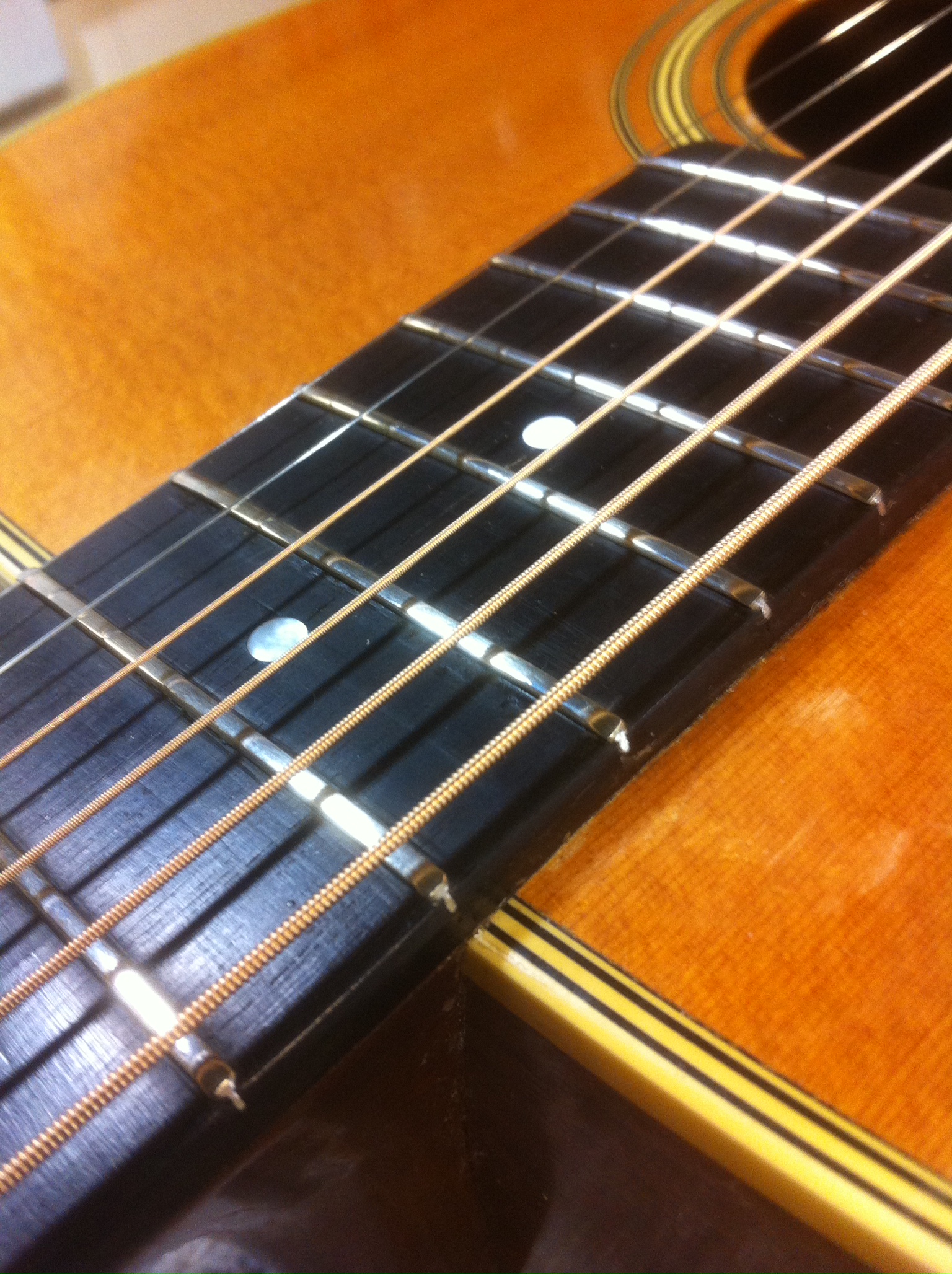
A neck reset is an advanced repair performed on instruments with set neck and bolt on neck constructions to restore the geometry relationship described above. Getting the joinery right is absolutely critical to an optimum setup. It involves the disassembly of the instrument into it’s two main structural components – body and neck. This is typically accomplished on set neck instruments by injecting steam into the joint by means of a tiny hole carefully drilled through the fretboard at the 15th fret slot (where the guitar and neck have been joined at #14), after having removed the fret from that slot.

It is a good idea to drill two holes in the slot; one to insert the needle to inject the steam, and the other to provide a vent for the excess moisture and steam to escape. This reduces the risk of causing further damage to the instrument’s neck and/or finish due to excess heat and moisture from the steaming process. Depending on the adhesive used by the maker or manufacturer, necks may come loose within 5 to 15 minutes. Where hide glue has been used, the process of removing the neck may progress more rapidly compared to, say, aliphatic resin adhesives (e.g. Titebond), which generally take longer to dissolve and loosen. There are no rules here! Neck resets are the kind of thing, like so many aspects of advanced guitar repair, that can be learned, but are not easily taught.
Stewart-MacDonald now offers a neat little tool called a “heat stick” that attaches to a soldering pen and safely applies the necessary heat to dissolve the glue joint without the need to apply steam. More info on that can be found on the Stewmac.com website. It is reasonably priced and works as advertised.
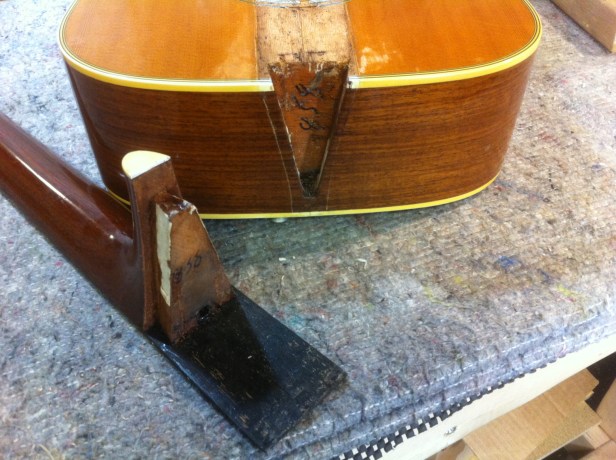
Once the neck and body have been successfully disassembled precise modification of the neck joint (in this case a dovetail joint) is done to promote better playing action when reassembled. This is a woodworking job! Sharp chisels, rasps, sand papers, a steady hand guided by patience, and, of course, the “luthier’s intuition” that comes by way of experience, are essential to go at this task and get it done effectively.
A neck reset is a surgical procedure, one that is fairly common to older archtop and steel stringed instruments. It is a repair that should be approached respectfully, not chased after, and performed by a competent luthier who thoroughly understands the dynamics of guitar construction and can confidently disassemble and reassemble an instrument from the top down, and back up again. A “babe in the woods” will likely be swallowed up venturing into this forest. The novice technician is well advised to purchase a few beater guitars from Craigslist or garage sales, and build their chops accordingly before attempting a professional repair.
Resets are typically an expensive repair, often times spawning ancillary repairs in the process. A neck reset may be needed when standard precision adjustments alone cannot restore the instrument’s playability.
The bottom line here is, when you have a guitar with too high action that’s a pain in the neck to play, and you can’t achieve optimum playability through adjustments — you probably need to consider a neck reset.
If you think your instrument’s neck may need to be reset you should bring it to a competent repair professional that has experience with diagnosing and performing this repair.




 My Numinosity...