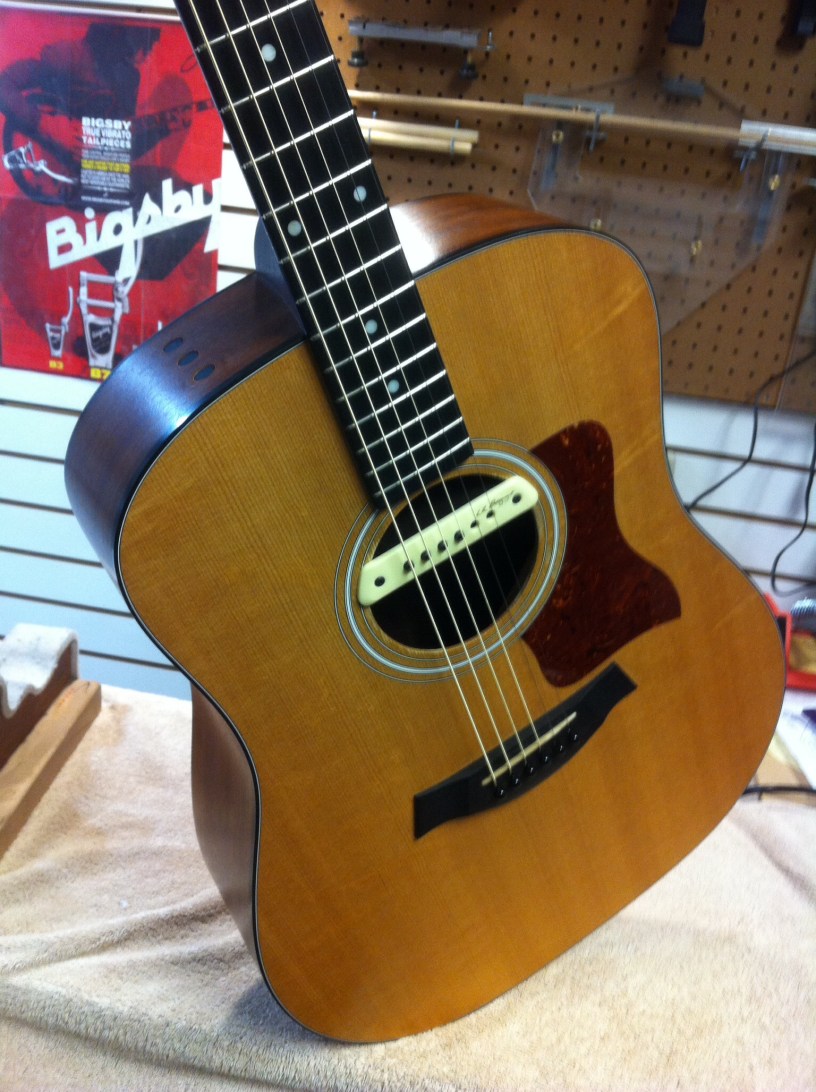
We love choices! As human beings and social creatures, the desire for personal freedom and liberty courses through our historical veins on an archetypal level. It’s no different with musicians and the musical expression they make, or the instruments they use to get them there. And that’s really what we want: the freedom to express ourselves creatively through music; the freedom to choose our own options when crafting our sound – be it gadgets like pedals, processors, and pickups, or something as fundamental to the sound of a well crafted acoustic guitar as the selection of discreet tonewoods and materials with which it is built. Options are good. In fact, options are necessary; and what a boring world it would be without them.
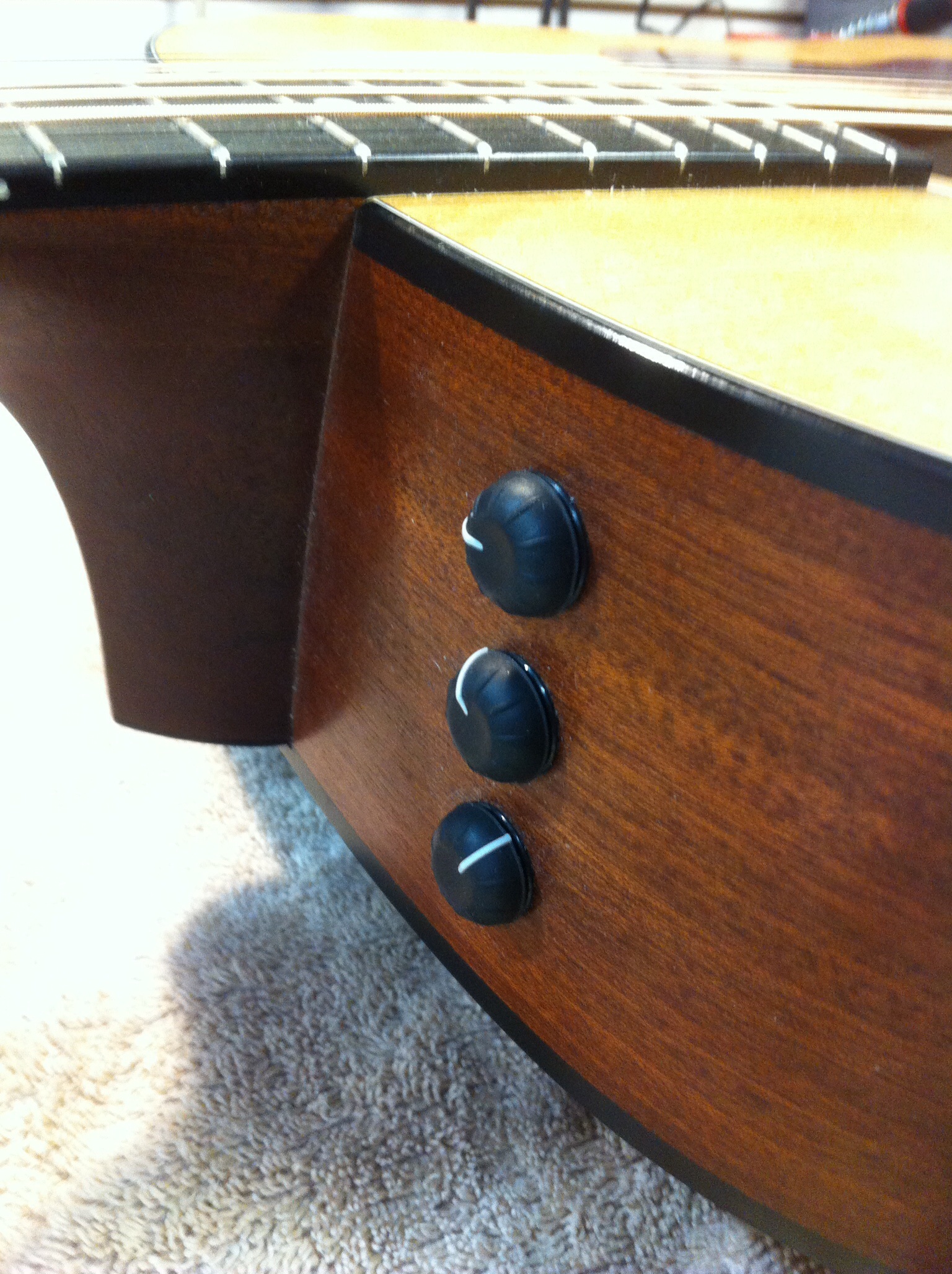
Taylor™ makes some great acoustic guitars. Many of their models come installed with Taylor’s signature Expression System™, a proprietary pickup system that attempts to offer a “best-of-both-worlds” (transducer plus condensor mic) pickup system, which is blendable with the on-board controls via a preamp mounted into the bass side of the upper bout on the guitar.
It’s a great system. Yet like any gadgetry or effects associated with your guitar, it requires some commitment on your end to figure out how to get your “best sound” from it. In general, you have to be willing to do the due diligence it takes to understand a device’s capabilities and limitations before you can determine if using it may (or may not) help you craft your signature sound.
As a musician and guitarist myself I have encountered the challenges of the “80/20 rule”. The 80/20 rule goes like this: “Does this __________ (amp, effects processor, stompbox, pickups, tone capacitors, strings… whatever…) get me 80% of the way there in terms of the sound I want, and over a wide range of playing scenarios? If so I can work with the other 20%, and call it a successful tonequest!
Let’s consider for a moment… what is “Tone”?
Tone is such a subjective thing. To some extent it is measurable; such as when tap-tuning a soundboard for an archtop or other acoustic instrument. But even then there is no static point at which the maker arrives, no “ah HA!” moment frozen in time, that marks a place that can be called “God’s own” tone, the place of tone unchanging. There is no mythical kingdom where Kool-Aid and the quest for perfect tone meet, and become a Unicorn — the eternal Unicorn of Tone — in the shape of an air-pumping soundbox we call an acoustic guitar. Yeah. I, too, know the frustration of chasing phantoms.
We pursue something perfect — only to arrive someplace where what we’ve actually grasped never quite meets what we’ve been pursuing all the while, that elusive tone ever in your head, yet only sometimes under your hand. The 80/20 rule provides an anchor to keep us from drifting out to sea and never arriving at the port of that sound we seek. Yet in the process of grasping we grow, we learn, we improve.
In reality “perfect tone” just doesn’t exist, not in nature and certainly not in the construction of a responsive guitar. In both cases there are far too many moving parts and variables constantly at play. By and large, and for the guitar player, when it comes to finding “that tone” you’ve been chasing in your head since 1982 a certain level of realism must guide all expectations. With diligent pursuit involving lots of trial and error an informed player evolves — a player who is paying close attention to their sound and the instruments and appliances by which they are crafting that sound. It’s a process, and by that process the best one can hope for is to reach a point where they have acquired the confidence to advocate an aesthetic that works for them; one that is based on direct experience with, and organic reaction to, the sonic elements present over a wide range of applications. This trial and error pursuit, this process, is always the dance you’ll be doing, especially if you are a performing and/or recording artist faced with the challenge of how best to control your sound “in the mix” — and the mix involves a lot more than you and your gear. It involves things you can control, and a lot of other variables over which you have little or no control: from the acoustics of different venues you perform in, to the skill of the sound guys responsible for chain-linking you into the rest of the ensemble; who hopefully respect your personal process along the way. There’s a lot of “moving parts and variables at play” to consider.
So a more honest, if not simplistic application of the 80/20 rule would ask the question this way: “Do I like what I’m hearing when I use this _________ (amp, effects processor, stompbox, pickups, tone caps, strings… whatever…)?” It’s a simple “Yes” or “No” answer where a modicum of “Let me work with it and see” is allowed in order to accommodate all the variables.
As Duke Ellington said: “When it sounds good it is good.”
I mentioned earlier that the Expression System™ from Taylor Guitars™ is proprietary. Unlike the familiar under-the-saddle Piezo systems, or transducers, or condenser mic with Piezo combinations, or even the sound hole solutions available for players today, the Expression System™ is designed and installed in such a way that the guitar cannot be easily converted, adapted, retro-fitted and setup with any other available pickup. This is good for Taylor, but not necessarily for players who own and love their Taylor guitars, but are maybe less than jazzed with the performance of the Expression System that came installed in them. Perhaps they have given it a fair shake and have decided it’s time to find another product that allows them to better “express” themselves.
Again – it’s all about options and choices. And FREEDOM!
Up until recently, if you were a Taylor owner, but not a fan of their Expression System, your options were these:

Option 1: You can modify the guitar to accommodate another product.
Generally speaking, this means boring out another hole in the bottom of your guitar to install the input jack because the current factory jack mount housing is proprietary and cannot facilitate any other input jack assembly other than the Taylor Expression System. After that you have to gut the guitar, remove what may be easily removed of the factory system, leaving the rest in the guitar. Many techs may remove the soundboard transducers only, leaving behind as non-functioning “dummies” the old preamp and the pickup Taylor also installs under the tongue of the fingerboard in most editions of their Expression System™. The actual jack housing and battery receptacle, sans the battery, may be left too, since neither are any longer functional with potential aftermarket replacement candidates.
This is not a very desirable option for most players. With option 1 you end up doing an invasive modification on the guitar to install another system, and leave intact the residuals of the Taylor system, like so much clutter. This isn’t technically smart or functionally appropriate as a solution for most players. As a luthier, in my view this isn’t a professional solution either and reflects instead the work of a “chop shop”.
Option 2: You can sell the guitar, and get another from a different company with either the electronics of your choice already installed, or the open architecture needed to easily install any aftermarket product you choose. This makes some players sad because they love their Taylor guitar. Other players go ahead and just make the jump. I’ve come across players who sold their Taylor ES guitar and ordered the same model from Taylor, sans the Expression System, then brought it in to have me install a pickup of their choice. No kidding! They really love their Taylor guitar. Go figure.
Option 3: You can do nothing, and choose to just “live with it” as is. Cue the old Johnny Taylor song… and go sit down. Sounds like a happily incompatible marriage to me.
So what exactly is the cost of Freedom, and what can you do in this case if you want to stay married to your Taylor and just lose the factory installed Expression System for a pickup solution that works better for you? It’s a case of loving your partner, but you really need to kick your mother-in-law to the curb! Up until recently the above mentioned options have been about the only thing to choose from.
Enter the TruPlug™ kit for both the AA and 9V ES platforms!


The TruPlug™ is a retrofit conversion kit that lets you seamlessly replace your Taylor™ Expression System™ with virtually any other type of platform available from any other manufacturer, and it let’s you do that with no modifications made to your instrument! Which is a BIG WIN for both techs and DIY’s! The kit consists of two perfectly machined high quality components. One component serves as a plug to fill the three holes in the upper bout where the Expression System’s preamp housing was mounted.
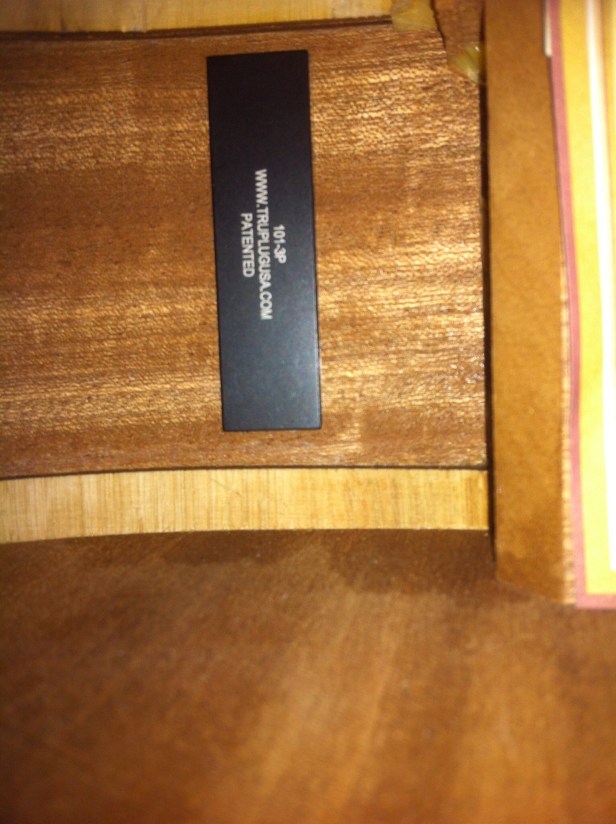

The other component installs in the exact same space formerly occupied by the Taylor system’s input jack and battery pack housing, and serves as a sturdy receptacle in which to install another flush mount input jack and strap button.
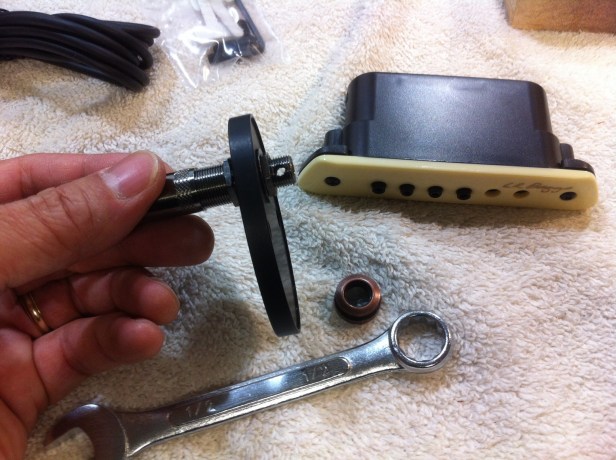
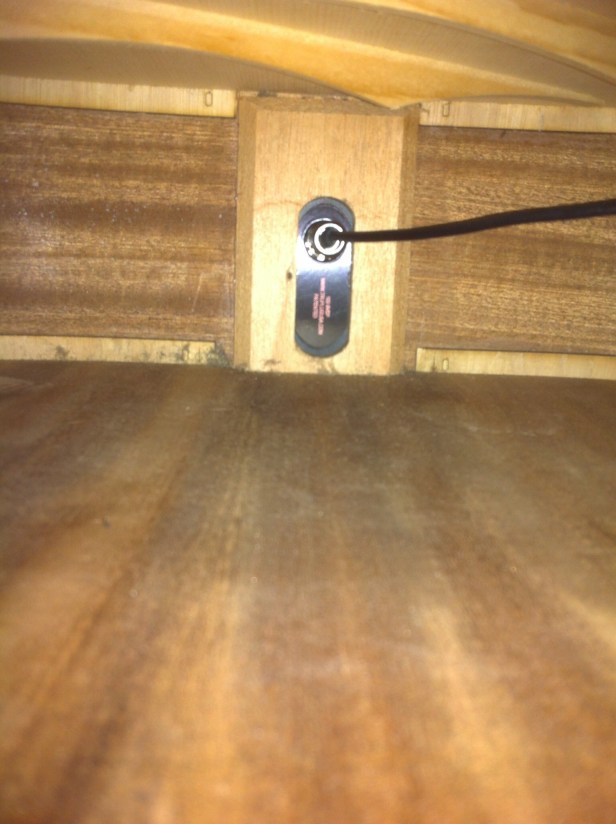
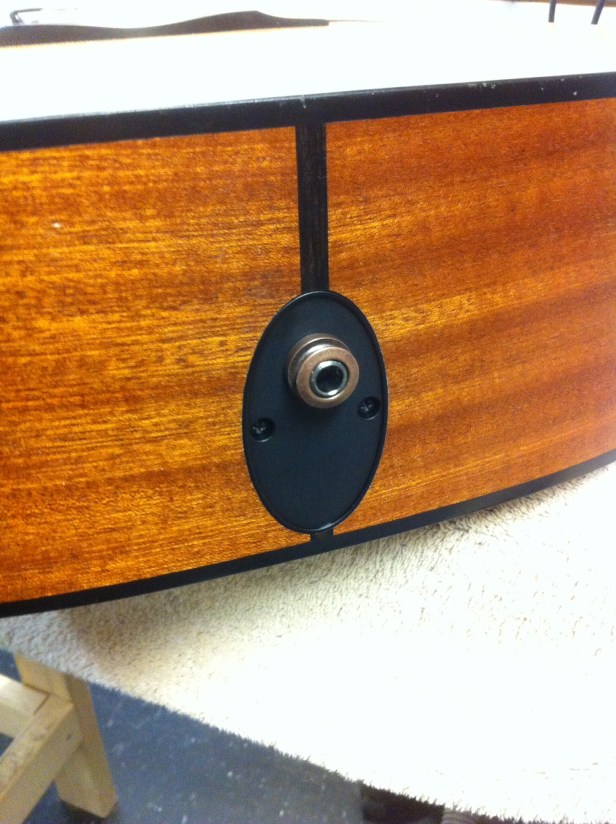
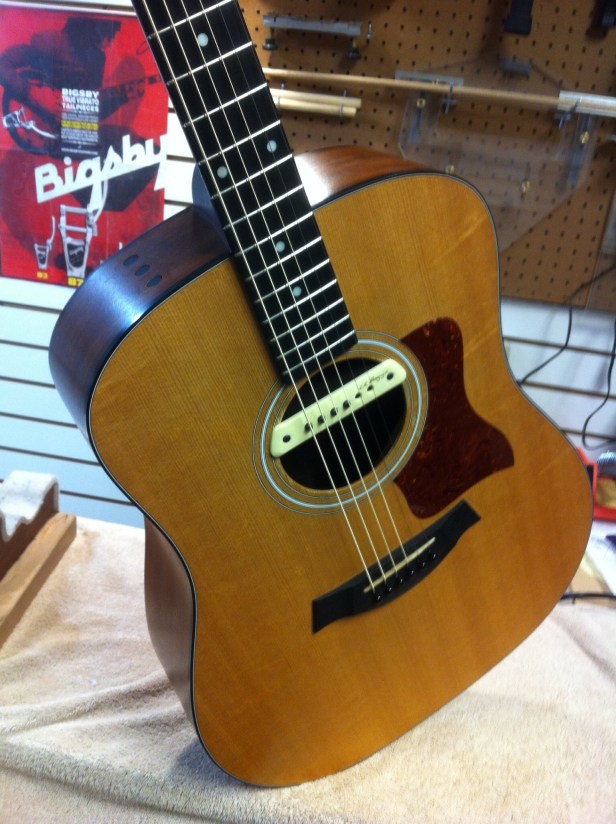
Because the TruPlug™ kit utilizes the existing layout of the Expression System™, there are absolutely no modifications being made to your guitar. Which means installing the TruPlug kit does not void the OEM warranty! Keep your Expression System™ and reinstall it if you decide to ever sell the guitar. It’s about FREEDOM remember?
The TruPlug system is available from Allparts.
Specify the conversion kit for the type of Expression System™ you have, either a AA or 9V, when ordering.
For more information on the TruPlug™ system for acoustic amplification visit truplugusa.com.
TruPlug puts more freedom of “expression” back in your hands, so you can…
LET FREEDOM RING!
 My Numinosity...