
Fret dressings are done to achieve an optimum setup. Dressing the frets is especially necessary for players who require extremely low action without fret buzz. A well dressed fret landscape facilitates ease of playing as well as better tone, sustain, and harmonic complexity of individual notes and chords. The neck becomes “faster”, facilitating arpeggio as well as chordal movements with seemingly effortless execution on the part of the player. Notes within complex chords are now noticeably articulate, as intonation becomes more precise over the entire range of the fretboard. A precision leveled, crowned, and polished fret landscape is the foundation of an optimized setup. When frets become dull, flat and not level through wear and tear it almost doesn’t matter what other adjustments are made. Until the frets are made right the instrument just won’t dial in the best setup. Fret dressing is the method of restoring frets that are worn, but may not yet need replacement. It is also routinely done to new frets installed either by the maker or manufacturer, and as part of a professional refret service.
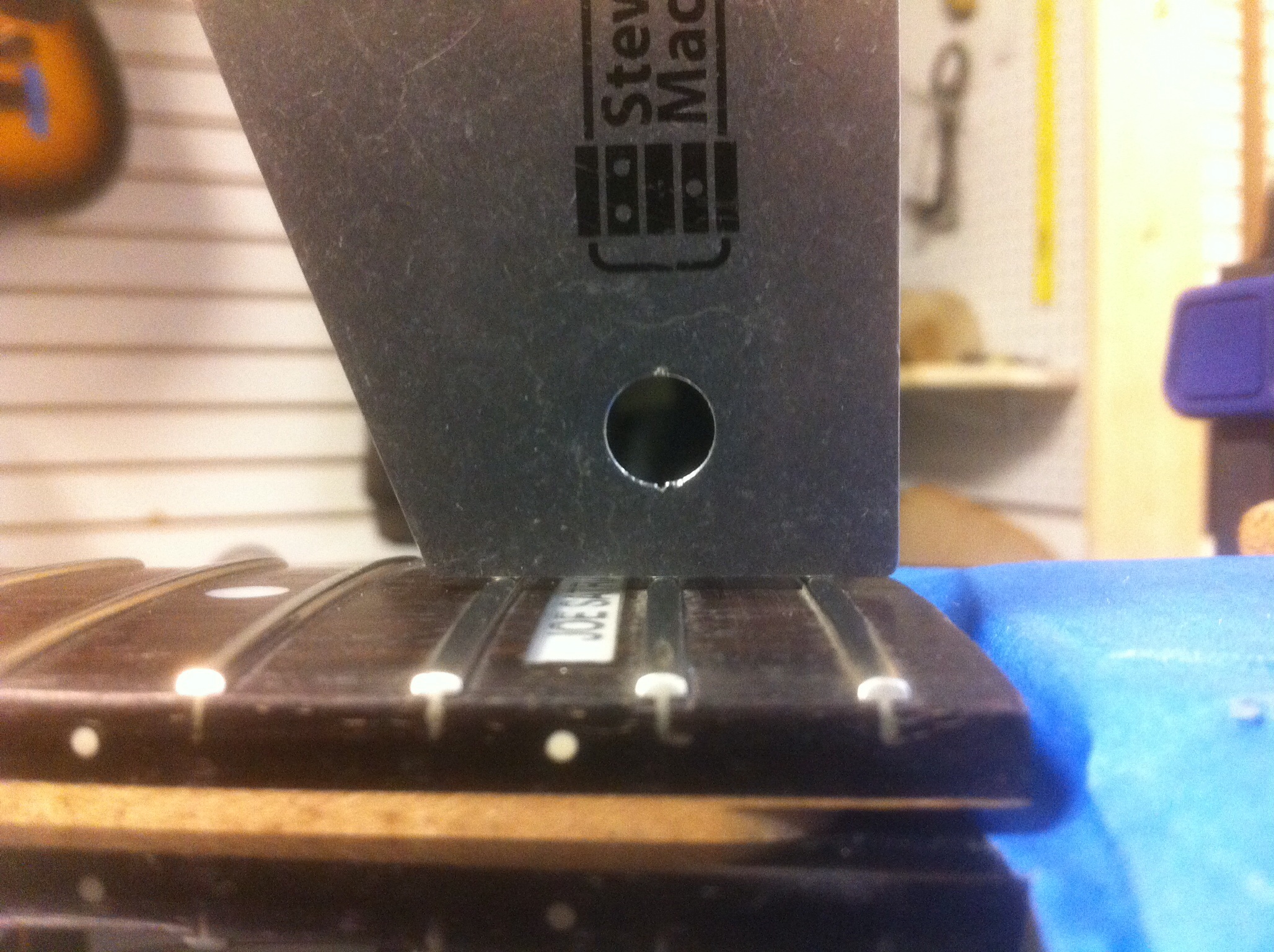
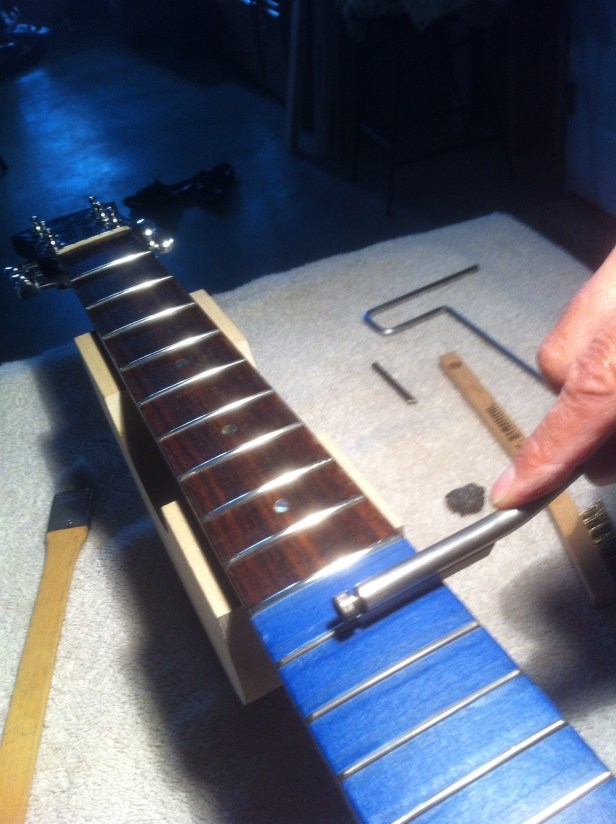
The fret dressing process begins with a survey of the entire fretboard landscape to determine the exactness of the existing level of the frets with respect to each other, and in relation to fretboard radius and relief. Frets are then leveled to a precise and uniform height consistent with the amount of relief to be used when the instrument is setup to the player’s preferences. A second survey is then performed on the fretboard. If necessary, subsequent leveling may be performed to ensure frets are precisely leveled to within less than 0.001″ differential in height with respect to each other. I use both flat and radiused precision leveling beams, as well as radius sanding blocks, that allow me to to level and radius frets to a common height within +/- 0.001″ overall precision. (A discussion about comparisons between different fret leveling technologies, such as Plek, the Erlewine Neck Jig, the Katana system, and laser leveling tools, is beyond the scope of this article, and will be included in a future blog post.) Next the fret ends are beveled and dressed to remove any sharp burrs that may cause discomfort, or a hindrance while playing. Finally, using specialized files I hand file each newly leveled fret to a perfect crown across the entire radius. My favorite file for dressing frets is currently the Medium (8″) 3-corner file from Stewmac.com, and I also have and use the Gurian 3-in-1 fret crowning set. These are great tools at an affordable price, but there are also several other products for dressing frets. Finding what works best for you and yields a consistently high-quality outcome is part of the “luthier process”.
After crowning, frets are then burnished to a brilliant sheen. The result: a precision leveled fret landscape that yields silky smooth, fast action with superior tone and responsiveness. Your guitar will play “like buttah!”

Fret dressings are part of a periodic maintenance routine performed on an “as needed” basis to restore the optimum setup and tone to your instrument. How often do you “need” a fret dressing? That varies from player to player, and depends on the type and gauge of fret wire on the instrument among other things. Most modern fretwire is able to be dressed multiple times, sometimes over a period of years, before the frets themselves must be replaced. Stainless steel frets are a popular choice with many players. Stainless frets almost never wear out, and may go the lifespan of the guitar without ever needing to be replaced. Most guitars have nickel-silver fret wire installed, and if played regularly will need their frets dressed once every 12 to 18 months, or at the first visible signs of pitting and flatness.
I like to include a precision setup, personalized as much as possible to the player’s preferences, as part of any fret work being done. To charge a customer extra for a setup after doing a fret dressing or a refret is, in my opinion, just crummy! It’s like going out to dinner for a gourmet meal and when they bring you the bill you find out you were charged extra for the plate and utensils to eat it. I mean, ya gotta eat, right?


 My Numinosity...