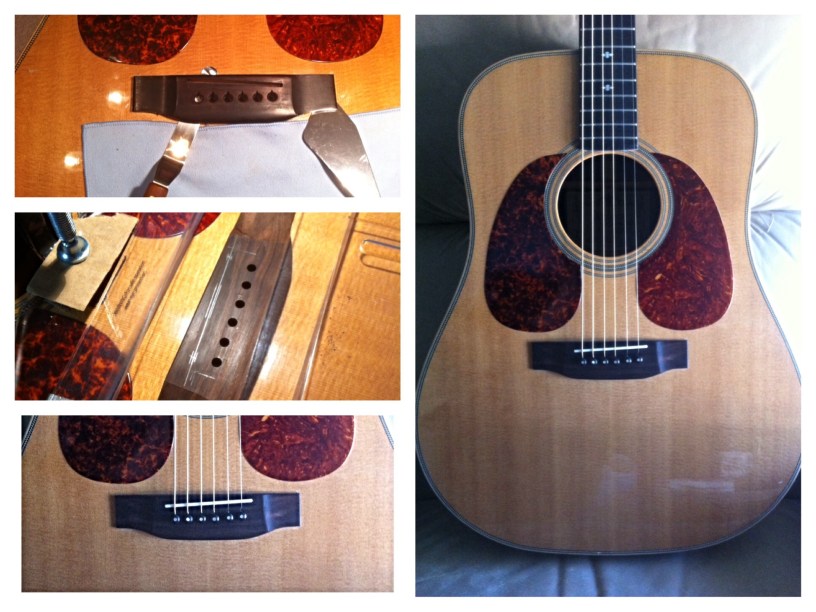
So you’ve found the “perfect” Steel String guitar, but there’s just one small problem… You’re a lefty and it’s a right-handed guitar. Or vice-versa. No problem! Convert it to your personal dexterity requirements. Chances are it is more affordable than you thought!
Check out these examples..
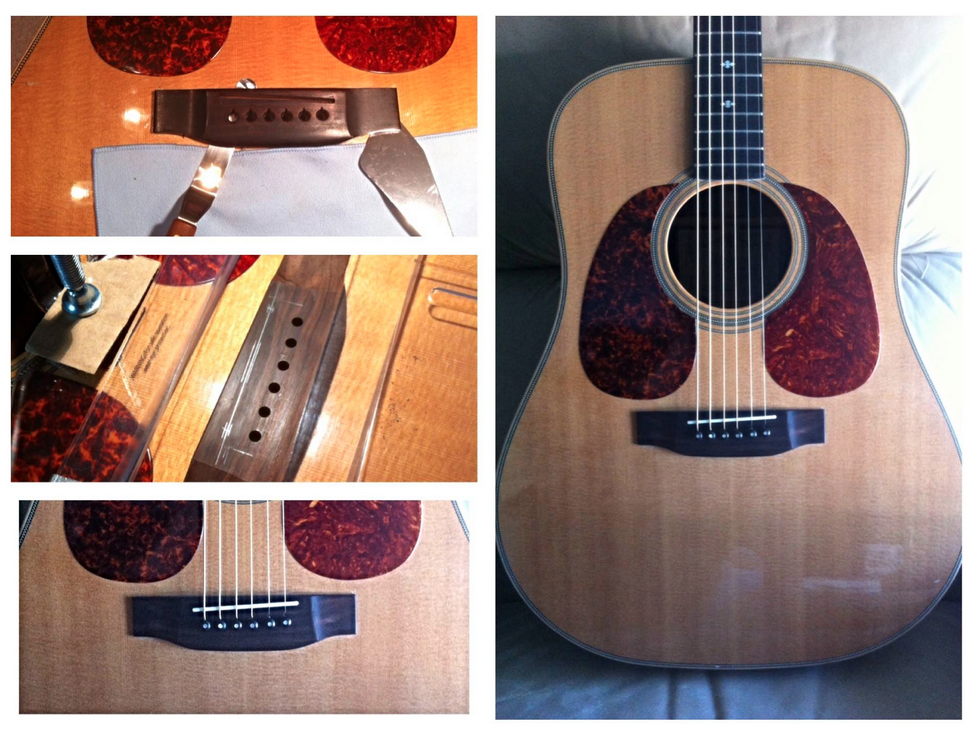
This Alvarez Yairi model DY-97 started out life in 1989 as a right-handed guitar, and was converted somewhere along the line to a lefty with another pick guard added. The DY-97’s were a limited run and are considered somewhat collectible and still very affordable. If you find one, they are great players whose value will likely increase.
The owner of this one, who is right handed, bought it with the intention of converting it back to it’s original spec, and brought it to the shop to have the work done. The project involved replacing the left-handed nut and bridge with new right-handed components, and then putting a great setup on it for the way she likes to play. I made the new bridge from Macassar ebony with a new hand-carved, compensated bone saddle.
She liked the “Everly Brothers” vibe of the dual pickguards, so those were left in place. A nice touch! The end result: a very happy customer, and a great looking, sounding, playing Yairi that’s ready for another 25 years or so of playing enjoyment!
Here’s another example, this time going in the opposite direction, converting a Right-handed Guild for a Left-handed player. The new left-handed bridge was handmade from a blank of Indian Rosewood using the original bridge as a guide and visual aid. I also dressed the frets, made a new bone nut and compensated saddle, installed an L.R. Baggs Anthem SL pickup system, fabricated a matching tortoise pickguard for a left-handed application, and put a setup on it to meet the player’s preferences. It was a complete makeover with a beautiful outcome and aesthetic appeal.
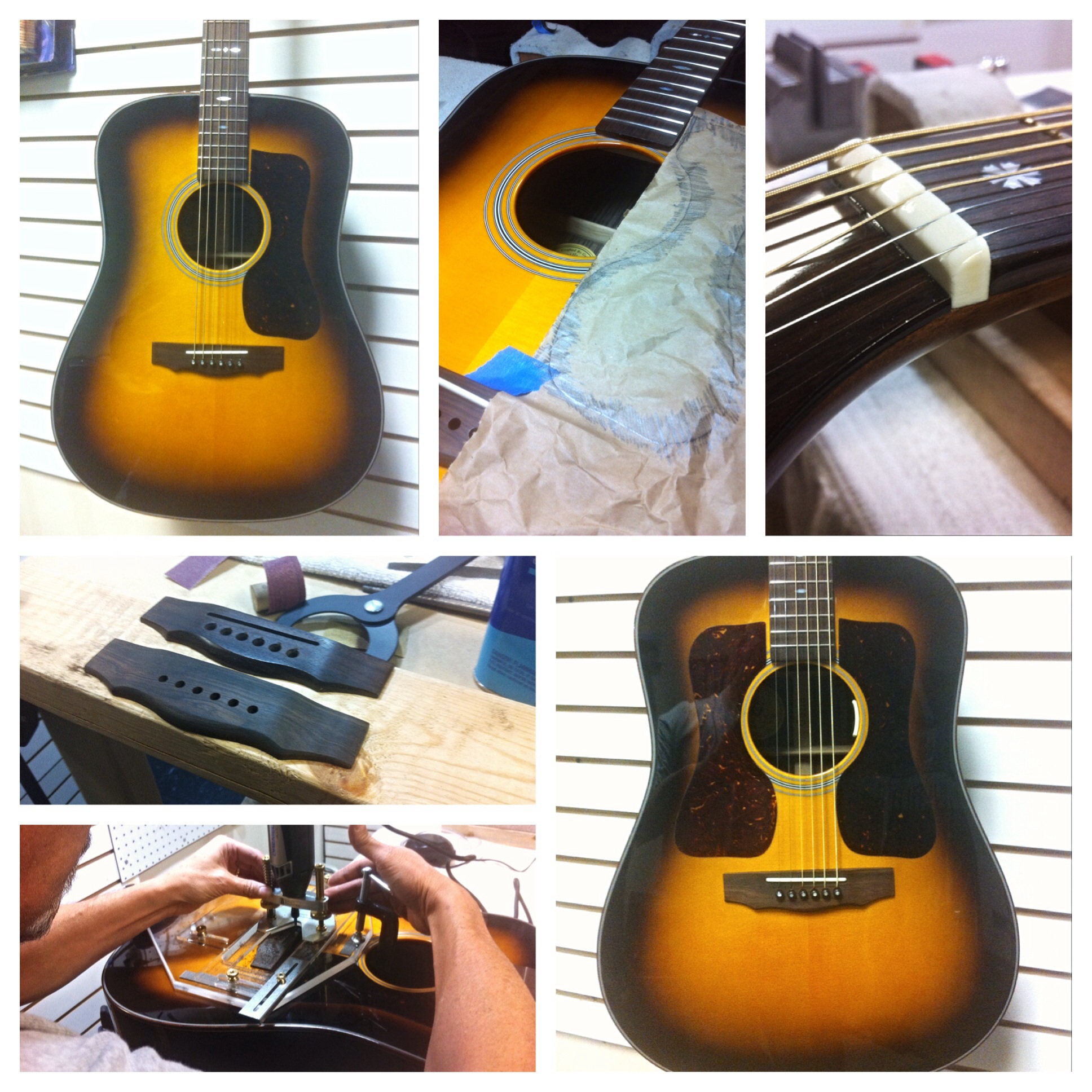
Note: In both of the above examples I made the new bridge from scratch using the old bridge as a template, changing the slot compensation to compliment the player’s right-hand or left-hand dexterity. Repro Martin-style bridges, such as are sold by Stewmac or LMI, can also be used, and you can get them un-slotted with no holes drilled to accommodate any variations in string spacing on Martin and other maker’s flat tops.
If the existing bridge is structurally intact the customer has the option to 1) repurpose it by having the slot filled with a close-compatible substrate then re-slotted for the appropriate saddle slot compensation, or 2) replace the bridge entirely at an additional charge for a custom hand made bridge. A re-purposed, re-slotted bridge is a perfectly acceptable repair in most cases. Exceptions may be when a customer prefers a different wood compliment, or simply does not want to leave any tell-tale signs of a bridge slot being filled and re-slotted. In such cases a new bridge is installed.
If you have this repair done professionally, expect prices to vary depending on materials and personal requirements, and of course who is doing the work. A “reasonable” fee for doing a steel-string conversion of this type may be as low as $220 USD or as high as over $600. It all just depends on what is required to best serve the instrument and the customer’s personal requirements.
 My Numinosity...